From real observations to learned behavior

Agents for robot learning.

Fan Zhang Michael Gienger

Honda Research Institute Europe

Explore the workflow

Follow the experiment.

Choose a step to see what happens.

Start in the real world

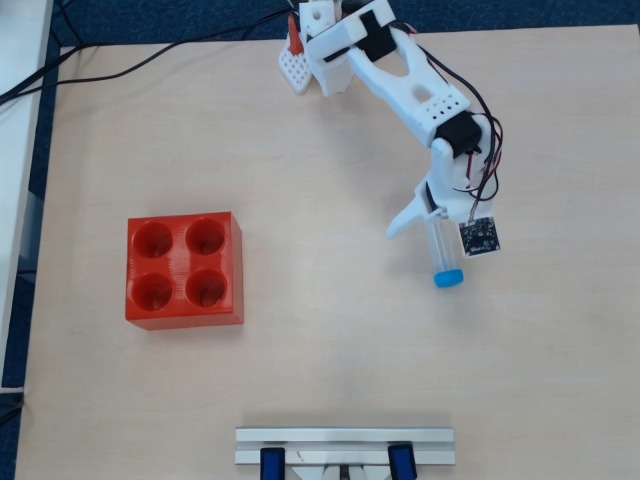
A robot, a vial and a rack.

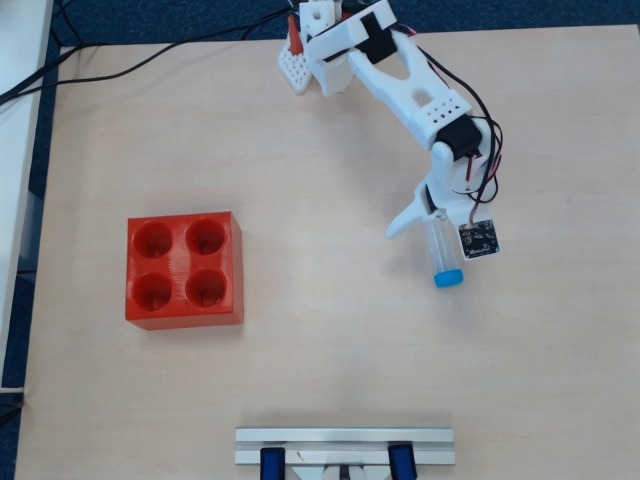
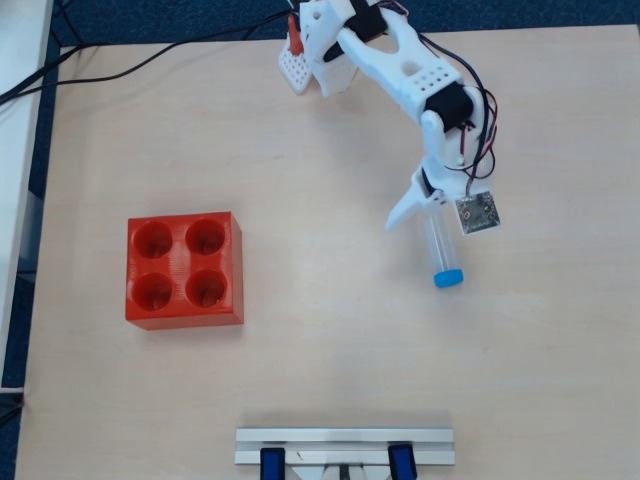
The real scene and its two camera views define the task we want to learn.

Real observations
External camera
Wrist camera
The task

“Pick up the vial and place it on the rack.”

Codex inspects

Reads the recorded views, identifies the scene and helps turn the task into an experiment.
0:00

Real observations

Direct policy editing

Weight-space programming.

We explored direct weight edits in both our trained SAC controller and π0.5, using saved observations and simulation to check their effects.

One matched scene, before and after a direct SAC weight edit. Playback speeds are labeled in the video.

SAC · controlled simulation adaptation

Vial placement, before and after.

Original Edited

Complete placements
0/6→3/6
Strict lifts
0/6→4/6

9,600 weights edited

No additional training

Six matched scenes under the same controlled visual-input perturbation. The edit restored the nominal placement score of 3/6.

What changed in the SAC weights?

Using the known RGB channel gains, we rescaled the first convolution’s input-channel weights in the lifting and perception networks to compensate for the input perturbation. Biases stayed fixed. The edited controller then ran directly in simulation, without an optimizer or an inverse image transform at runtime.

The 50-second story